TWO ACCOUNTS, FOUR QUESTIONS
Side by side.
Still worlds apart.
Comparison is a way to sharpen a question, not to make the answers the same.
Choose two readings. The questions stay the same; each answer returns to its own text.
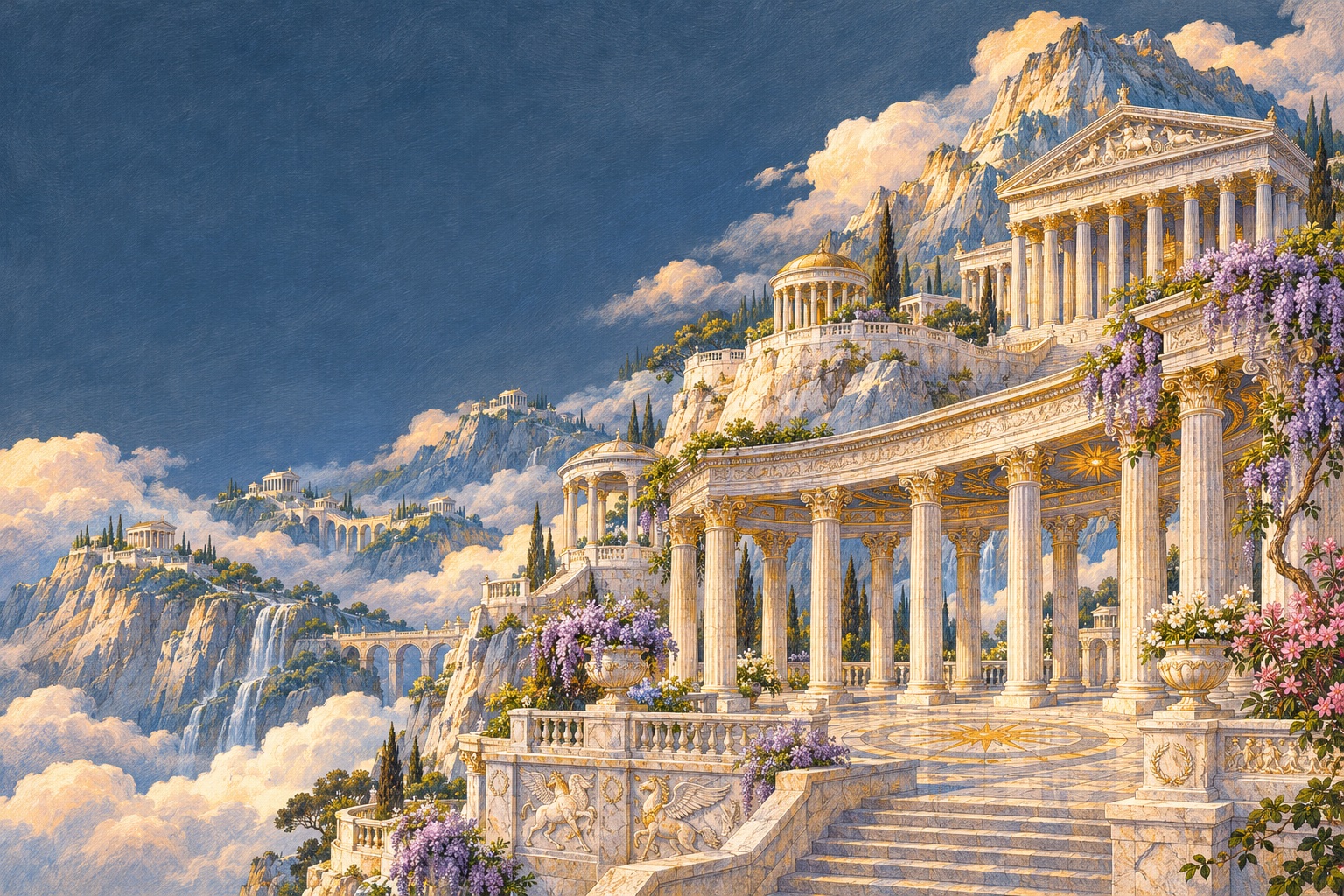
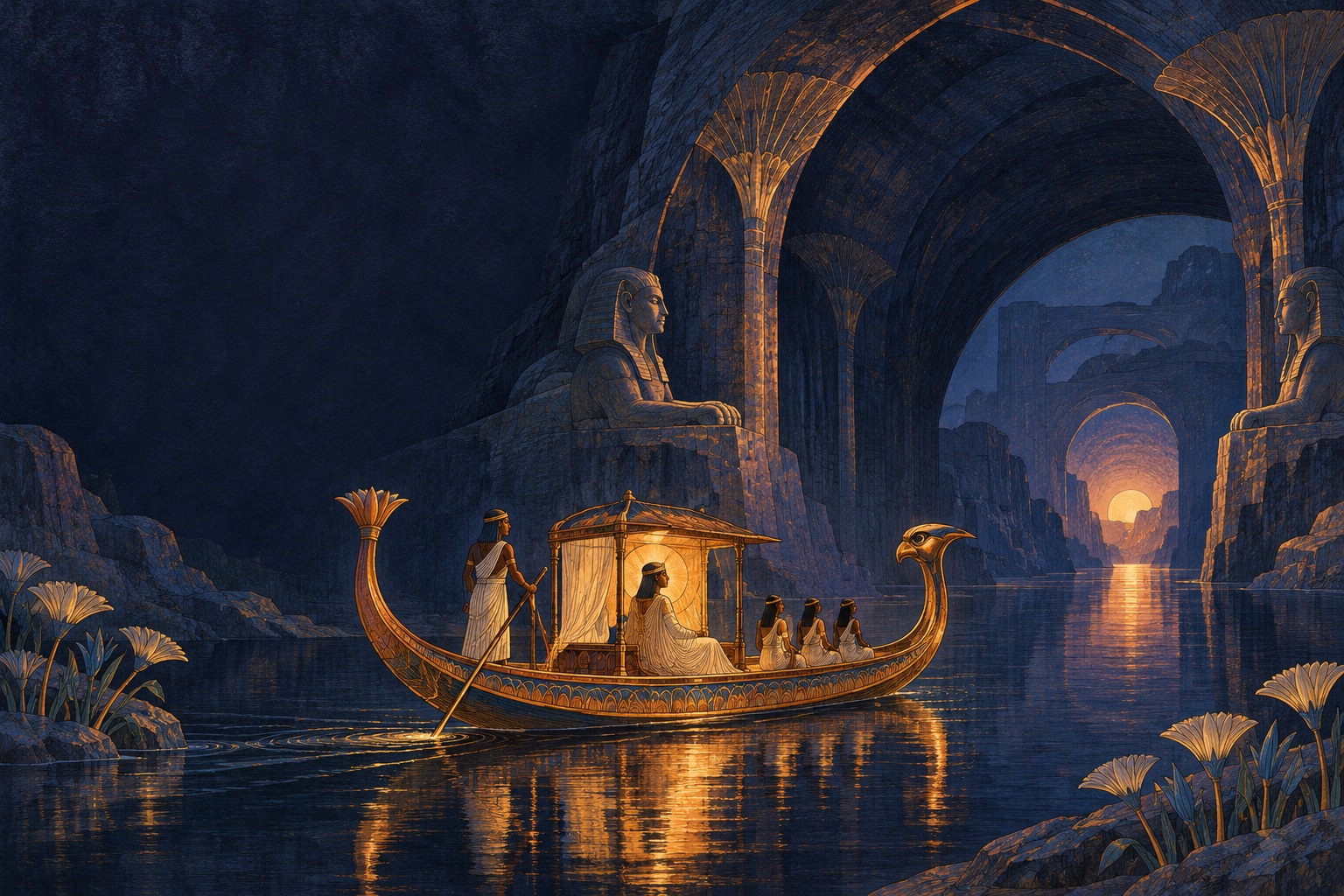
What kind of place is it?
In the selected epic passages, Olympus is the gods’ home and a place of shared life. It is not described as an ordinary settlement reached by following a measured road.
The Duat is a cosmic and underworld landscape. This entry describes one composition, the Amduat, with twelve nocturnal divisions.
How does the account cross a boundary?
Athena returns there after visiting Nausicaa in a dream. At the Iliad’s evening feast, the gods eventually leave the gathering for their own dwellings.
The selected account follows the sun god’s journey; its first division includes a river and a boat.
What unsettles the place or passage?
Weather does not disturb the home in the Odyssey. The Iliad, however, places a dispute before its peaceful closing feast.
The journey moves through darkness toward renewed emergence. Treating the entire landscape simply as punishment misses that cycle.
What might a reader notice?
Read the relationship between divine security and household friction. A calm place can still contain a complicated community.
Follow the sequence from the first division to the twelfth. Ask what a landscape means when its organizing principle is time.
This is an editorial comparison across specific sources. Similarities do not establish common origins, shared theology, or a single geography. Review the source choices.